
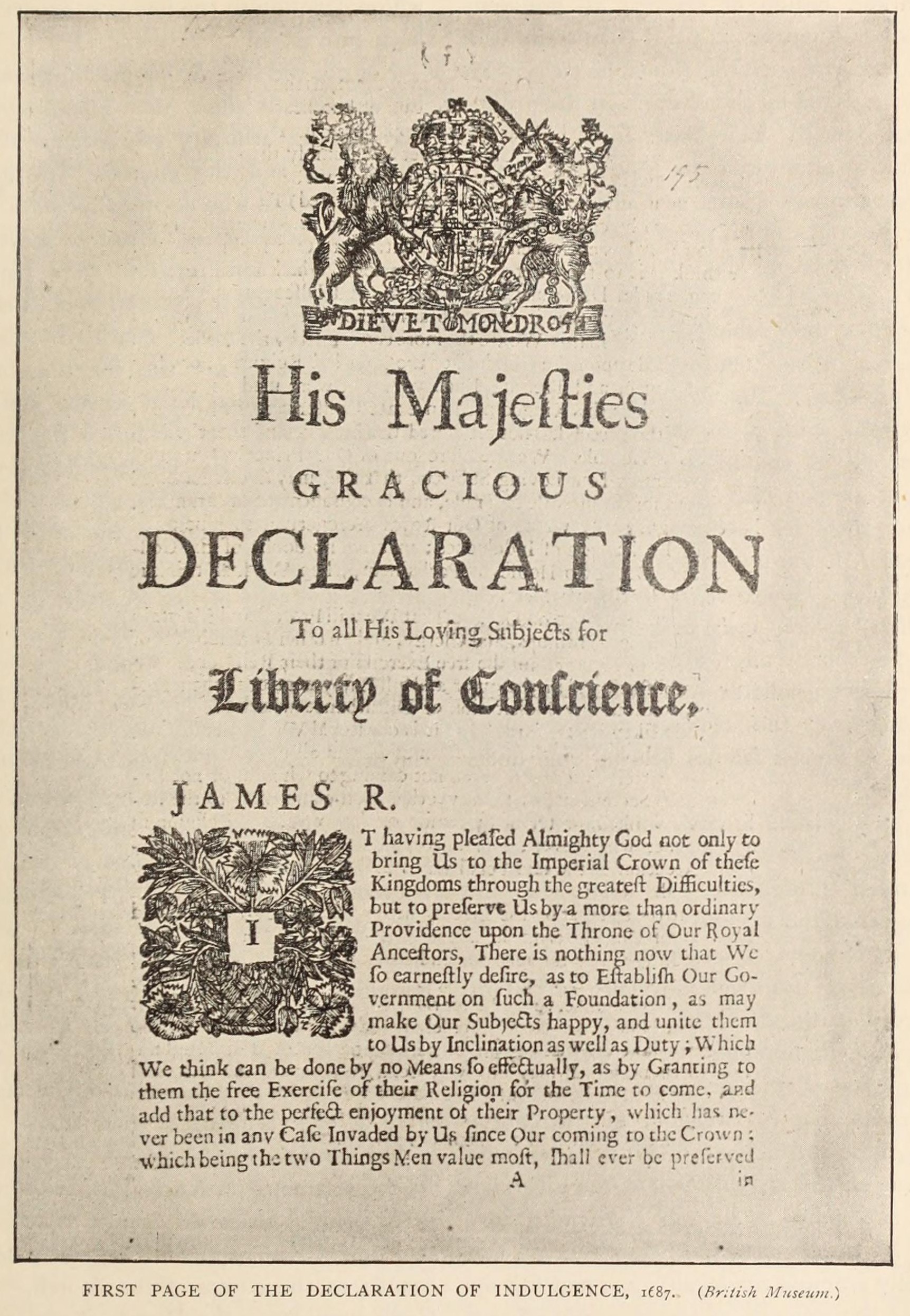
Few institutions of the medieval Latin Church have attracted as much historical controversy as the indulgence. Often reduced in popular memory to the crude image of a friar selling paper certificates that promised entry into heaven, the indulgence was in fact a complex theological, legal, and social instrument that developed over several centuries and touched nearly every dimension of medieval religious life. To understand indulgences only through the lens of their sixteenth century abuses is to miss the intricate doctrine of penance, purgatory, and ecclesiastical authority from which they emerged. This article traces the theological origins of the indulgence, its institutional growth during the high and late Middle Ages, its social and economic functions, and the criticisms it provoked well before the Reformation gave those criticisms their most famous expression.
The Theology of Penance and the Origins of Indulgence
To understand the indulgence, one must first understand the medieval sacrament of penance. By the early Middle Ages, the Church had settled into a threefold structure of penance: contrition, confession, and satisfaction. Contrition was the inward sorrow for sin; confession was the verbal acknowledgment of that sin to a priest; and satisfaction was the outward act, whether prayer, fasting, almsgiving, or pilgrimage, by which the penitent demonstrated and in some sense completed the process of repentance.
Crucially, medieval theologians distinguished between the guilt of sin (culpa) and the temporal punishment due for sin (poena). Confession and absolution, in this framework, removed guilt and the threat of eternal damnation, but the debt of temporal punishment remained, to be paid either in this life through penitential acts or in the next through the sufferings of purgatory. It was precisely this residual temporal punishment that the indulgence addressed. An indulgence did not forgive sin itself. Rather, it remitted, wholly or in part, the temporal punishment that remained after guilt had already been absolved through confession.
The doctrinal machinery that made this remission possible was the concept of the "treasury of merit," systematized most fully by theologians such as Alexander of Hales and later Thomas Aquinas in the thirteenth century. According to this doctrine, the merits of Christ and the saints, being infinite and superabundant, formed a spiritual treasury upon which the Church, through the authority of the pope as Christ's vicar, could draw. By granting an indulgence, the pope or a bishop acting under his authority was understood to be transferring a portion of this treasury to the penitent, thereby covering the debt of temporal punishment still owed.
Early Forms and the Crusading Indulgence
The earliest indulgences, appearing in the eleventh century, were modest in scope: partial remissions granted to those who performed specific acts of piety, such as visiting a particular shrine or contributing to the building of a church. The single most important catalyst for the expansion of the practice, however, was the crusading movement. In 1095, Pope Urban II, preaching the First Crusade at the Council of Clermont, offered a plenary indulgence, a full remission of temporal punishment, to those who took up the cross with the proper spirit of penitence and completed the journey to Jerusalem.
This crusading indulgence proved enormously significant, not only because it mobilized tens of thousands of participants across Latin Christendom, but because it established a template that would be repeatedly reused and adapted: the granting of extraordinary spiritual rewards in exchange for extraordinary acts of service or sacrifice to the Church. Over the following centuries, plenary indulgences were extended to those who fought against heretics such as the Albigensians, to those who defended the Papal States, and eventually, controversially, to those who simply contributed money toward such causes rather than participating in person.
Institutional Expansion in the Later Middle Ages
By the thirteenth and fourteenth centuries, indulgences had become a routine feature of ecclesiastical life, no longer confined to crusading contexts. Popes granted indulgences to pilgrims visiting Rome during Jubilee years, beginning with the Jubilee of 1300 proclaimed by Boniface VIII, which drew enormous crowds and considerable revenue to the city. Local bishops granted more modest indulgences for visiting particular churches or relics, contributing to charitable institutions such as hospitals and bridges, or attending specific liturgical celebrations.
The fourteenth century also saw the emergence of the indulgence for the dead, extending the benefits of remission to souls already suffering in purgatory. This development, formalized in papal pronouncements from the 1470s onward, marked a significant theological shift. Whereas earlier indulgences had rewarded the penitential acts of the living, indulgences for the dead allowed the living to perform acts, most commonly the payment of money, on behalf of souls who could no longer act for themselves. This innovation would later become one of the most bitterly contested aspects of the entire system.
Parallel to these theological developments ran an increasingly sophisticated administrative and financial apparatus. Indulgence preaching campaigns, often organized to fund specific building projects, became major undertakings involving papal commissioners, local clergy, printed certificates, and in some cases professional fundraisers known as "pardoners" or "questores." These agents traveled from town to town, preaching the spiritual benefits of the indulgence and collecting the associated contributions, a practice satirized memorably in Chaucer's portrait of the Pardoner in the Canterbury Tales, whose greed and hypocrisy Chaucer used to expose the moral hazards inherent in the system.
Social and Economic Dimensions
Indulgences cannot be understood purely as theological abstractions; they were embedded in the economic and social life of medieval communities. The construction of many of Europe's great cathedrals and civic monuments was financed in part through indulgence campaigns, which functioned as a form of charitable fundraising with spiritual incentives attached. Hospitals, leper houses, bridges, and city walls likewise benefited from indulgence-linked donations, blurring the line between pious devotion and civic infrastructure investment.
For ordinary laypeople, indulgences offered a tangible, comprehensible way to engage with a penitential system that could otherwise seem abstract and daunting. In a culture deeply anxious about the fate of the soul after death and the torments of purgatory, the promise of a quantifiable reduction in punishment held obvious appeal. Indulgence certificates, often printed with blank spaces for the recipient's name, became some of the earliest products of the printing press after its invention in the mid-fifteenth century, illustrating how new technology was rapidly absorbed into existing religious practice.
At the same time, the commercialization of indulgences generated persistent unease. Theologians and canon lawyers debated the proper limits of the practice throughout the later Middle Ages. Critics worried that the laity increasingly understood indulgences not as aids to a broader penitential discipline requiring genuine contrition, but as transactions that could substitute for it entirely, a purchase of security rather than a spur to moral reform.
Precursors to Reformation Critique
It is a common misconception that criticism of indulgences began with Martin Luther in 1517. In reality, unease about the practice had a long history within the medieval Church itself. Theologians such as Jean Gerson, chancellor of the University of Paris in the early fifteenth century, expressed concern about the proliferation of indulgences and the confusion they caused among the laity regarding the true requirements of penance. The Council of Constance and other church councils of the period debated abuses associated with indulgence preaching, including exaggerated claims made by some preachers about the certainty and scope of the remissions on offer.
What distinguished Luther's intervention was not the novelty of the criticism but its context and consequence. The indulgence campaign associated with Johann Tetzel in 1517, launched partly to help finance the rebuilding of St. Peter's Basilica in Rome and partly to help the Archbishop of Mainz repay debts incurred in acquiring his office, became the immediate occasion for Luther's Ninety-Five Theses. Luther's theses questioned not indulgences as such but the theological assumptions underlying their sale, particularly the notion that they could substitute for genuine inward repentance, and the propriety of the papacy profiting from the fear of purgatorial suffering. The controversy that followed would irrevocably alter the course of Western Christianity, but it built upon centuries of internal debate rather than emerging from nowhere.
Conclusion
The medieval indulgence resists simple characterization. It was at once a serious theological construct, rooted in a coherent if contested doctrine of merit and satisfaction, and a practical instrument of ecclesiastical finance and social organization, capable of funding cathedrals and provoking cynicism in equal measure. Its long development from the penitential practices of the early medieval Church, through the crusading indulgences of the eleventh and twelfth centuries, to the elaborate and commercialized system of the fifteenth century, reflects broader patterns in medieval religious history: the increasing centralization of papal authority, the growing sophistication of Church administration, and the persistent tension between institutional needs and spiritual ideals. Understanding this longer history allows us to see the Reformation controversy over indulgences not as a sudden rupture but as the culmination of debates that had simmered within Latin Christendom for hundreds of years.
Further Reading
- R.W. Southern, Western Society and the Church in the Middle Ages
- Diarmaid MacCulloch, Reformation: Europe's House Divided, 1490-1700
- R.N. Swanson, Indulgences in Late Medieval England: Passports to Paradise?
- Jacques Le Goff, The Birth of Purgatory
- Nikolas Jaspert, The Crusades
Image Courtesy: By Unknown author - The Church of England: a History for the People, Volume 4 by Henry Donald Maurice Spence-Jones. Cassel & Comp., London, 1898. Onlineː https://archive.org/details/churchofenglandh04spen/page/n5/mode/2up, Public Domain, https://commons.wikimedia.org/w/index.php?curid=168170782
Comments (0)